What customers say
Skyfox SolarSolar design and installation · San Jose, CA
Serving San Jose and nearby towns
★★★★★5.0 from 6 Google reviews
Private website concept.
San Jose, California
Skyfox Solar is a design-and-install service for San Jose homeowners on PG&E and San José Clean Energy. A quote would start from a year of your hourly use: solar sized to daytime needs, plus an optional 4–9 p.m. battery on its own line. Under net billing, when you use power decides what pays.
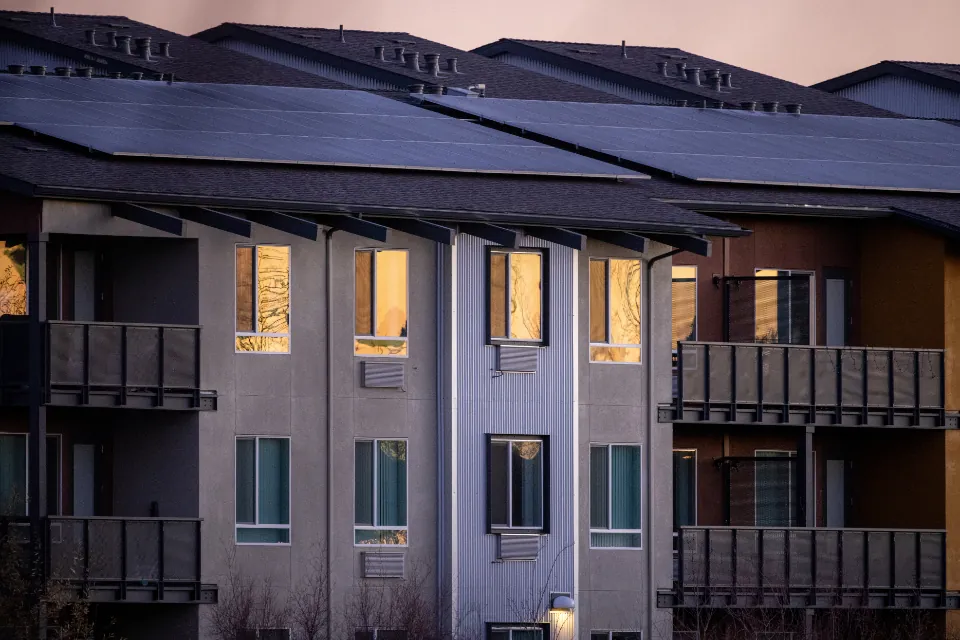
San Jose, California
Skyfox Solar designs for San Jose households on PG&E and San José Clean Energy, where the 4-to-9 p.m. rate makes the hourly shape of your use matter more than the yearly total.
What customers say
Serving San Jose and nearby towns
★★★★★5.0 from 6 Google reviews
What we do
Call or visit
| Phone | (408) 461-8941Call to book an assessment. |
|---|---|
| Office | 75 E Santa Clara St Ste 900, San Jose, CA 95113Parking on site. |
| Estimates | Free, in writingDesign and price as separate documents. |
Why homeowners pick us
Our story
Installing across San Jose, Santa Clara, Campbell, Milpitas and Sunnyvale.
Where we work
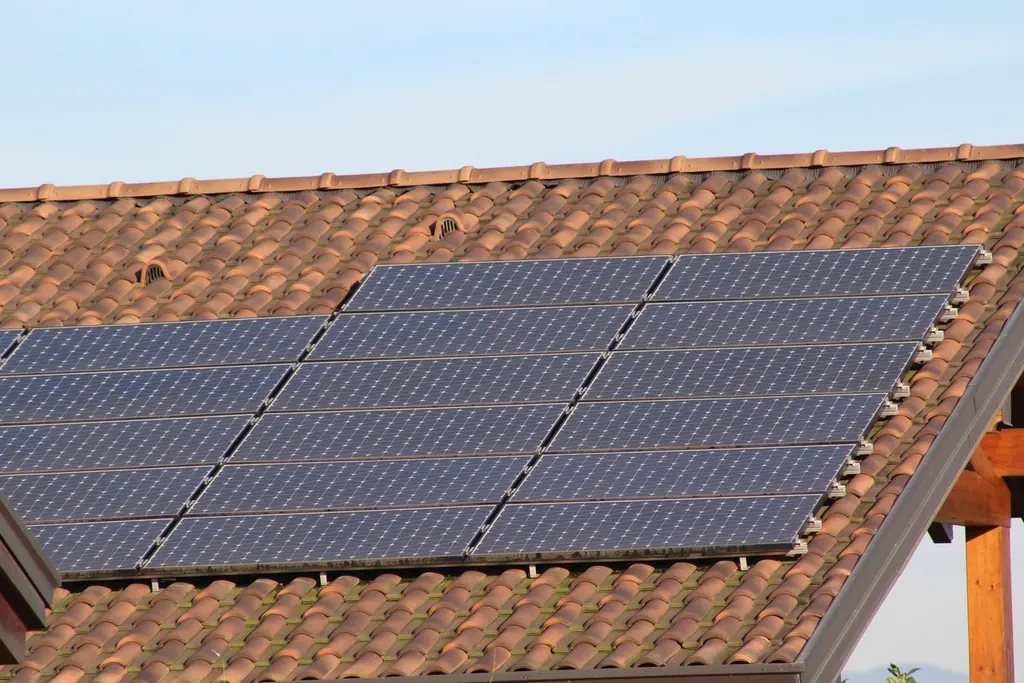
An array sized to what you use while the sun is up, plus the loads you can move into those hours, with its own cash price and price per watt.
Price Option AOptional and on its own line: a battery sized to the 4–9 p.m. kWh your solar does not cover, with usable kWh, discharge kW and reserve in writing.
Price Option BThe proposed service in five steps. Each one ends with something you can check.
Twelve months of hourly or 15-minute data from your utility account.
Load shape, evening loads that could move, roof faces and the main panel.
An hourly match chart, two price lines and the price per watt.
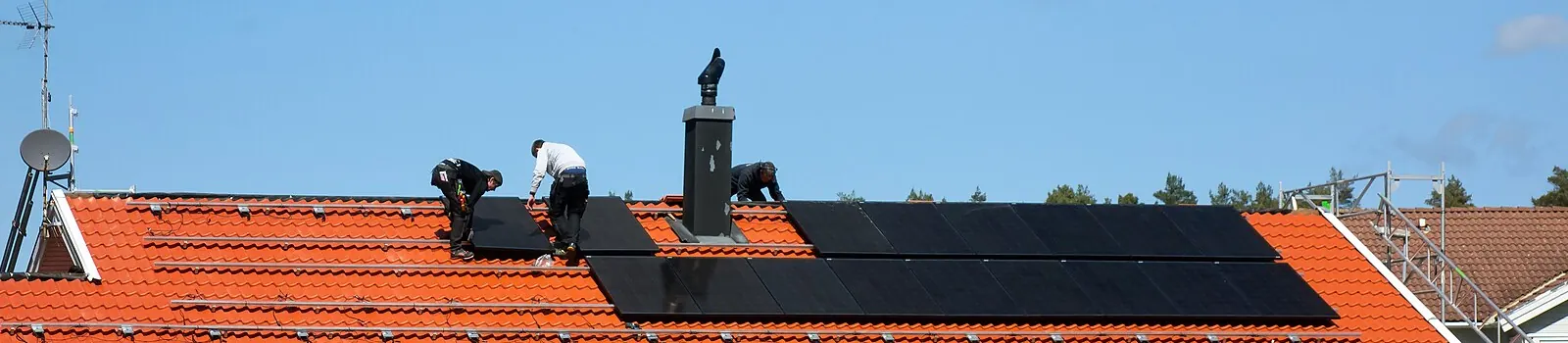
The city permit, the install and the inspection, with who files each.
The utility's approval to switch on, then monitoring from day one.
Type your own numbers: the kWh you use from 4 to 9 p.m. on a typical day, and the battery figures on a quote. The check shows whether the battery covers the evening and keeps up with your busiest hour.
It uses only what you type, and nothing is sent. It is not a sizing: battery losses, winter recharging and rate details are left out.
Covers the 7.0 kWh evening gap with 1.0 kWh to spare.
5.0 kW of discharge keeps up with a 3.0 kW busiest hour.
10 kWh usable × (100% − 20% reserve) = 8.0 kWh each evening
Before you agree to a system size, find out what share of your electricity you use between 4 and 9 p.m. That share matters more than your yearly total.
PG&E customers who apply for solar interconnection on or after April 15, 2023, go on the CPUC's Net Billing Tariff, which PG&E calls the Solar Billing Plan. Net billing means you buy grid power at your rate plan's price, while the power you send back earns an export credit that changes by hour and month, with values locked for nine years. You must also take E-ELEC, PG&E's electrification time-of-use rate: Peak 4–9 p.m., Partial Peak 3–4 p.m. and 9 p.m. to midnight, Off-Peak midnight to 3 p.m., every day of the week.
Panels produce most at midday, the cheap end of that clock. If your household uses much of its power in the evening, that is when PG&E says export credits are highest and grid power costs the most. A system sized to your annual kWh can still leave you buying the expensive evening hours while it sells cheap midday ones.
Oversizing doesn't fix that. PG&E's solar getting-started page says there is "no financial benefit to installing a system larger than your home needs." The CPUC's consumer guide goes further: a system that covers all of your use isn't necessarily the best investment, and systems are typically sized to around 80–85% of last year's use. A quote that promises to "zero out" your bill with a bigger array is selling the wrong target.
| What happens to a kWh your panels make | What 1,000 of them are worth (Illustrative calculation) |
|---|---|
| Used at home instead of bought | About $323, at California's average residential price of about 32.34¢ per kWh (EIA data via EcoGen, September 2025 to August 2026) |
| Left over at San José Clean Energy's April true-up | $35.75, at SJCE's Net Surplus Compensation rate of $0.03575 per kWh (as of April 1, 2026) |
That is roughly 9 to 1. Two cautions: 32.34¢ is a statewide average, not your E-ELEC price, and the year-end rate applies only to surplus left at true-up; exports during the year earn hourly credits.
So size solar to the power you can use at home or credit within the year. Then decide separately whether the 4–9 p.m. hours are worth covering with a battery, or by moving loads to midday.
How we work. Skyfox Solar would design and install solar for San Jose-area homes around one question: when does your household use power?
The battery has one job in this proposal: evening self-supply. It stores midday solar for the 4–9 p.m. peak, the hours in which PG&E's Solar Billing Plan guide suggests using stored energy. Whether it also runs the house in an outage depends on the equipment and settings; if that matters, ask for it in writing.
In the City of San José, PG&E owns the wires and San José Clean Energy (SJCE), the city's community choice provider, supplies electricity by default. The design starts from that pairing's credits.
Coverage of San Jose and nearby towns covers these towns.
The assessment would take about 90 minutes on site (Illustrative duration; a real operator would set it).
We hand over five documents (Our service deliverables):
PG&E tells customers to compare bids on production and net cost per watt. Ask every installer for both, on the same basis.
Illustrative example. These are not Skyfox Solar prices or San Jose production data.
- The household. On an average summer weekday it uses about 7 kWh between 4 and 9 p.m. The busiest evening hour draws about 3 kW, when cooking and laundry overlap.
- Option A. A 6.0 kW DC array sized to daytime use: $16,800 solar-only ($2.80 per watt).
- Option B. Option A plus a $13,500 battery on its own line. A battery with 10 kWh usable and a 20% reserve leaves 8 kWh for the evening, enough for the 7 kWh gap, and it needs at least 3 kW of discharge for the busiest hour.
- Main-panel upgrade. $3,100, its own line, only if the panel can't take the new equipment.
- Quote total with everything. $33,400.
Usable kWh is how much stored energy the battery can deliver; discharge kW is how fast. Too little kW and it can't keep up with the oven and dryer together; too few kWh and it runs out at 7:30. The reserve setting holds back part of the charge, so each evening you get usable kWh minus the reserve.
| Option A | Option B | |
|---|---|---|
| Covers | Daytime use, plus loads moved to midday | Daytime use plus the 4–9 p.m. gap |
| Pays when | Most solar is used at home | Evening kWh are covered in each season |
| Hourly chart must show | Midday use against midday output | Whether midday surplus recharges the battery in winter too |
The tempting alternative is to skip the battery and add panels. Each extra kW costs about $2,850 (Illustrative calculation at the state benchmark below), and on an array already sized to daytime use it mostly adds midday exports. If those credits outrun your use by year end, the leftover earns $0.03575 per kWh from SJCE.
Option B isn't automatically right either. Suppose the same illustrative household moves laundry and the dishwasher to midday and the gap drops to 4 kWh. A smaller battery, or none, may then fit better. That is why the load-shift sheet comes before the battery line, not after it.
The battery choice can also change the paperwork. Next door, Milpitas sorts solar permits by whether a battery is included.
Remove the battery, panel upgrade and roof work, then divide what's left by the DC watts on the quote. DC watts is our assumption; ask the installer to confirm the basis.
| Step | Illustrative calculation |
|---|---|
| Quote total | $33,400 |
| Remove battery and panel upgrade | − $13,500 − $3,100 |
| Solar-only price | $16,800 |
| Divide by DC watts | $16,800 ÷ 6,000 W = $2.80 per watt |
| State benchmark | $2.85 per watt |
| Same quote, blended | $33,400 ÷ 6,000 W = $5.57 per watt |
EcoGen's California solar cost benchmark is $2.85 per watt (State benchmark, EcoGen Solar Cost Index, September 2026 Edition, prices as of September 25, 2026), for a host-owned system of about 6.70 kW, cash before incentives, solar only, battery priced separately. It's a modeled installed price per watt, not a quote for your home, and EcoGen doesn't say whether it is per DC or AC watt.
The example's $2.80 is $0.05 below the benchmark, about 1.8%: in line. The blended $5.57 would look 95% above it, yet that's battery and panel money divided by solar watts. Compare a blended figure with a solar-only benchmark and you could reject a fair quote, or miss an overpriced battery.
Some San Jose cost figures published online don't state whether they include a battery or which tariff they assume. Treat them as leads, not benchmarks.
Inside the solar line, panels, racking, inverter and labor set the price; a west-facing layout may add a premium, which belongs on its own line. Outside it, the battery is priced by evening kWh and discharge kW, the panel upgrade by your panel's rating, and roof work by roof age. Ask whether the permit fee is included.
The IRS Residential Clean Energy Credit "is not available for any property placed in service after December 31, 2025." A 2026 quote that still subtracts 30% for a system you own is wrong. With a lease or power-purchase agreement, the provider may claim a business credit on its side; ask how much reaches your price.
PG&E's guide lists an Energy Export Bonus Credit of about 0.9¢ per kWh for 2026, falling to about 0.4¢ in 2027. PG&E says the value is set at permission to operate; the CPUC ties the adder to applying before the end of 2027. Ask which year's value the quote assumes.
San Jose requires a building permit before solar panels or a battery go in. The City's Development Services Permit Center handles both, and its solar and storage battery permit page sets two routes. Ask which one your project takes.
The City recommends a licensed contractor and warns that whoever signs the permit is responsible for the work. Routes differ next door: in Campbell, the roof covering decides the permit route.
Check the name on your bill. In the City of San José, PG&E delivers and SJCE supplies unless you've opted out to PG&E supply. Unincorporated county pockets inside the city's outline are on Silicon Valley Clean Energy (SVCE), the same supplier as Sunnyvale, which settles solar credits differently: see SVCE's monthly rollover and spring cash-out. A Santa Clara address is on Silicon Valley Power, that city's own utility, outside the CPUC's net billing rules; see how Silicon Valley Power pays for solar.
After the City's final inspection, the installer sends PG&E the interconnection application, a single-line diagram (a one-page wiring drawing) and the final building permit. PG&E charges a $145 interconnection fee, upgrades your meter and sends written permission to operate (PTO), typically 5 to 10 business days later and up to 30. Don't switch on before PTO arrives in writing.
On the Solar Billing Plan, PG&E enrolls you in E-ELEC automatically; its winter runs October to May.
SJCE's solar billing page explains the split. SJCE bills generation monthly, rolls unused credits forward and trues up every April. PG&E trues up delivery separately, on its own date.
At SJCE's April true-up, surplus earns $0.03575 per kWh (as of April 1, 2026) as a bill credit; SJCE says that is 25% higher than PG&E's rate. Move or close the account and excess credits are forfeited at the final true-up. SJCE also reports that 75% of its existing solar customers use more than they produce over the year, with an average residential true-up of about $600 owed. Plan for the April bill.
One line stays on the bill whatever the panels make. PG&E's Base Services Charge, $24.15 a month for most customers since March 2026, can't be offset by solar credits. Ask the installer to show it on the bill estimate rather than leave it out.
Use monitoring to check the design as well as the output. In the first summer, see when exports land: Option A should export mostly at midday. With Option B, the battery should discharge between 4 and 9 p.m.; if it sits full through the evening, check the settings.
The CPUC guide lists the aftercare questions worth settling before you sign. Keep the answers with your PTO letter:
Put these to every San Jose solar installer you're comparing, and ask for the answers in writing. The quote checklist on this site holds the same points in a form you can fill in.
Sizing
Price
Your California rights
Payment
Not for a system you own placed in service after December 31, 2025, whatever some listings still say.
Not as a new customer. PG&E moved NEM 2.0 applications not cleared by April 14, 2026, to the Solar Billing Plan. Existing NEM 2.0 customers keep their tariff for 20 years from interconnection.
Not in this proposal. Option B covers the 4–9 p.m. peak with your own midday solar. Outage use depends on equipment and settings.
As of November 2026, California's active solar exclusion keeps a new system's added value out of your assessment if it's completed before January 1, 2027, per the Board of Equalization. A 2027 completion isn't covered unless the law changes.
Each guide covers the local utility, permit and housing questions that change an evening-use design. Coverage of every town is proposed and not yet confirmed.
Pick your town and what you want priced. The page builds a checklist to take into any installer's quote visit, so every bid answers the same questions.
This is a concept: the checklist runs on this device. Nothing is sent or stored, and no one will contact you.